Why Circassian Culture Is Not Part of Eskişehir's Tourism
An essay questioning why Circassian culture, deeply rooted in Eskişehir, is not more visible in the city's story — inspired by an experience in Kars.
I am Circassian. I say this deliberately, because I am writing not as an outside observer but as someone who grew up inside this culture.
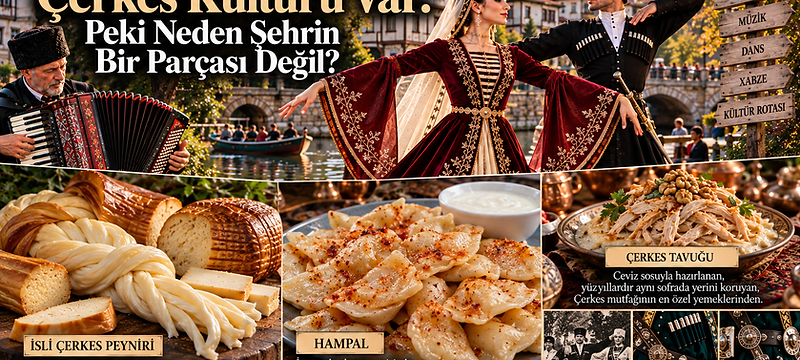
I know the sound of the psıne, the rhythm of the Caucasian dances, the staples of our table: hampal, Circassian cheese, Circassian chicken. I know that Xabze is not just a few traditions; it is an etiquette, a way of behaving, a philosophy of life.
It is not hard to find traces of this culture in Eskişehir. There are Circassian families, our villages, our associations, our weddings, our food, our music, our dances. There is a memory passed down from generation to generation. In short, Circassian culture exists in Eskişehir. And it is not a culture that arrived recently and became visible through a few events: we are talking about a great Caucasian heritage that has lived in this geography since the 19th century, taken root, founded villages, and woven itself into Eskişehir's social fabric.
So one inevitably asks: Why is this culture not a more visible part of Eskişehir's city narrative?
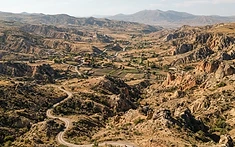
Kars made me ask this question
When I visited Kars as a tourist last year, I began to look at the city with a slightly different eye. I saw how a city's history and culture can be carried into tourism. Sometimes a dish was not just a dish; beside it there was music, a story, a tradition, an atmosphere. You don't just walk into a restaurant and eat; you experience a piece of that city's culture.
There, I inevitably thought of Eskişehir: Why haven't we done this?
Actually, it is not something Eskişehir has never done. Eskişehir is a city where different cultures live together and where it has succeeded in making certain cultural values part of the city identity. One of the finest examples is Crimean Tatar culture. Today, if you ask someone who comes to Eskişehir, "What do you eat in this city?", çibörek is among the first answers. Çibörek is no longer just a Tatar dish; it is part of Eskişehir's gastronomic identity. Göbete is another important flavor of this cuisine.
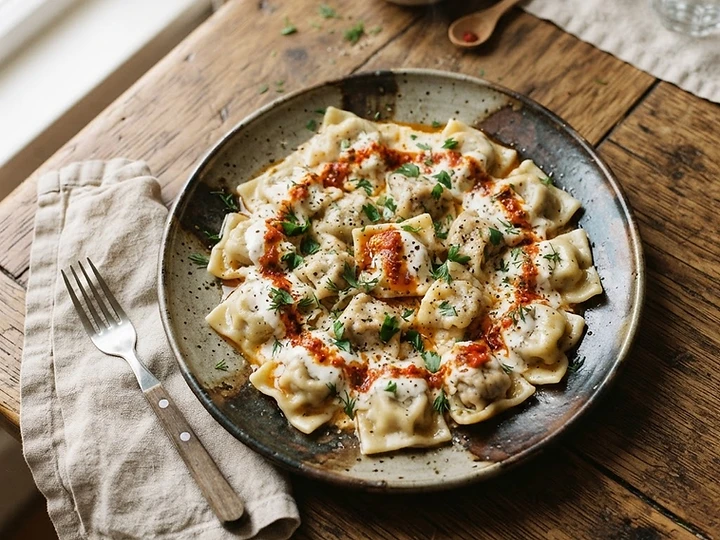
So Eskişehir has already shown us how a culture can blend into city life. A dish can be the carrier of a culture, a tradition can become part of the city experience, a cultural heritage can add value to tourism. Why, then, should we not think the same for Circassian culture?
The issue is not creating a new culture
I am not saying let's set up a new association or open a new culture house. Because they already exist. There is an association in Odunpazarı that keeps Caucasian culture alive; there are people who have preserved this culture for years, organized events, and sustained the dance, the music, the traditions. So there is no empty space here; on the contrary, there is a strong cultural accumulation. What I am saying is something else: Let's carry this accumulation a little more into the city.
Circassians have preserved their culture until today in families, villages, associations, weddings, at the table, in music and dance. Thanks to this, the culture has been carried to the present. But culture continues not only by being preserved but by being lived; sometimes the way to keep it alive is to bring it together with more people. Let Circassian culture not remain a culture that lives only within the Circassian circle. Let the people of Eskişehir know it, let the tourist who comes to the city know it. Let it appear in a restaurant, at a city event, at a gastronomy gathering. Let it be part of a cultural route.
This city should be known for hampal as much as for çibörek
I think the most concrete example of this is food. Because food is one of the most powerful ways for culture to reach people. Çibörek is a beautiful example: a person does not have to be Crimean Tatar, does not have to be from Eskişehir; they come to the city, hear about çibörek, eat it, and that flavor becomes part of their Eskişehir memory.
So why should hampal not be the same? Hampal, one of the important dishes of Circassian cuisine, is still mostly known only within its own cultural circle. Yet in Eskişehir there are people who know it, make it, and pass the recipe down from generation to generation. I too sometimes miss those tables, those dishes. But the issue is not only my longing. The real question is this: Why can't a person in Eskişehir go to a restaurant and eat hampal? Why shouldn't a tourist discover hampal as one of the city's local flavors, just like çibörek? Why shouldn't a restaurant menu include hampal alongside çibörek?
Besides, Circassian cuisine is not only about hampal. There is Circassian chicken. There is Circassian cheese (especially the smoked variety, with its unique making and appearance, a gastronomy story in itself). There is abısta, haluj, şıpsı-paste... There are pastries prepared with different fillings and recipes that vary from house to house. A significant portion of these are flavors that even people living in Eskişehir do not know well enough. Yet here there are people who know them, recipes, memory. So what needs to be done is not inventing a new culture; it is making the existing culture visible.


Caucasian Night: More than a table
Actually, the issue is not just a dish entering a menu. What I saw in Kars was a culture offered as a holistic experience: you enter a venue, there are regional dishes, but beside them there is music, dance, an atmosphere that tells the story of that city. Eating is not just filling your stomach; it is living a piece of that city's culture. One of the finest examples of this is the Caucasian Night events organized in Kars.
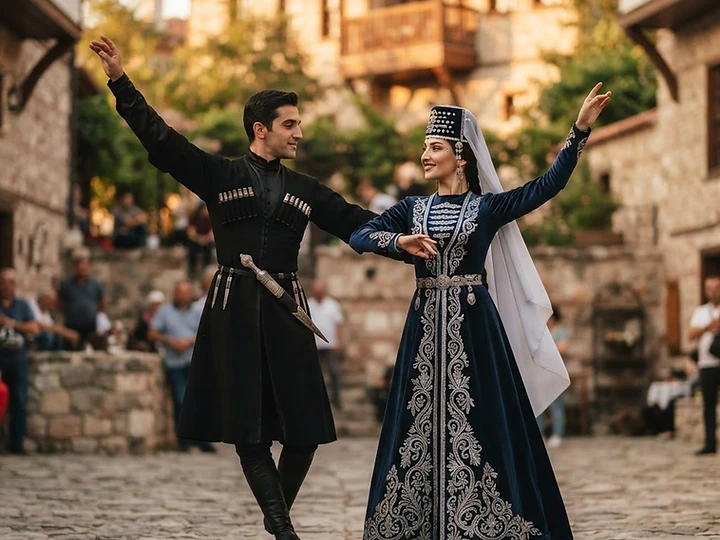
What we call Caucasian Night is actually not a simple food event. It is an evening where a venue, a restaurant, or a culture hall is dedicated to Circassian and Caucasian culture. On the table there is hampal, Circassian chicken, Circassian cheese, abısta, haluj. But the table is only the beginning. As the evening progresses, the sound of the psıne rises, Caucasian dances begin; dances like hampal, şişen, kafe continue with music. People do not just eat; they become part of the rhythm, the music, the etiquette of that culture. The table manners of Xabze, the tradition of hospitality, respect for elders, and the order of the table are lived spontaneously within this evening. So Caucasian Night is not so much an event as a holistic cultural experience.
I believe this can happen in Eskişehir too. There are families in the city who know Circassian cuisine, masters who cook these dishes, musicians who play the psıne, young and old who know the dance. If there are venues that bring these together — a restaurant, a culture house, an event space — regular Caucasian Nights can be organized in Eskişehir too. A restaurant evening can offer samples from Circassian cuisine, followed by dance performances with Caucasian music, and guests can be invited into this experience. The tourist does not just eat; for an entire evening, they live inside Circassian culture.
Moreover, this is not just an entertainment night. Caucasian Night is a living mechanism through which culture is passed from generation to generation. Young people learn the dance there, musicians expand their repertoire there, cooks share their recipes there, elders tell their memories there. It is a place where a culture lives not only in a museum or a book but at the evening table, in music and dance. If these evenings become regular in Eskişehir, Circassian culture will not only be preserved; it will become a living part of the city's social and cultural life.
Eskişehir's cultures are not rivals
The aim here is not to say "other cultures are invisible in Eskişehir, now let Circassian culture be visible." On the contrary; Eskişehir's richness comes from the coexistence of different cultures. There is Crimean Tatar culture, Balkan cultures, Manav culture, Türkmen culture, Circassian and other Caucasian cultures... Each of these cultures adds something different to Eskişehir's story. Çibörek is a beautiful example; why shouldn't hampal be another?
Because what makes a city special is not only what you eat and drink there; it is what you feel there. A dish can tell you the story of a community, music can carry you to another geography, a dance can bring the memory of a migration that took place a hundred and fifty years ago to the present, even the way a cheese is made can carry the trace of a culture. That is what cultural tourism is, in part: going to a place not only to see it but to briefly become part of its story.

Why not a Caucasian culture route?
Here I am not talking about founding a new association or culture house. I am talking about bringing the existing cultural structures, people, and accumulation together with the city more strongly.
For example, gastronomy events can be organized with the existing Caucasian association and the carriers of this culture. Hampal, Circassian chicken, Circassian cheese, and other traditional dishes can be promoted in selected restaurants. Caucasian music and dance can become part of city events. A cultural route telling the history of Circassian villages and settlements can be created. Oral history projects can be carried out. Local producers and cooking families can be included in this story. Thus the culture does not remain only in an association event; it blends into the city, into social and economic life.
Bringing culture into tourism does not mean turning it into a commercial show. Done right, it increases the visibility of the culture: it encourages young people to take renewed interest in their own culture, opens space for local producers, prevents dishes from being forgotten, creates a new field for the musician, the dancer, the cook, and the producer. And most importantly, it lifts culture from being merely a memory of the past and carries it into the life of today. Culture is not preserved only by being stored; it is preserved by being lived, by being shared, by being told, and sometimes by having the courage to step into the middle of the city.
Why shouldn't Circassian culture be part of Eskişehir tourism too?
What I have tried to tell since the beginning of this article actually fits into a single sentence: Why shouldn't Circassian culture be part of Eskişehir tourism too?
This question is not a rebellion, not a demand. On the contrary; it is a modest question asked to make more visible a richness Eskişehir already possesses. A tourist who goes to Kars experiences that city's culture in food, in music, in dance, in the street. A tourist who comes to Eskişehir should be able to do the same — not only with çibörek, but with hampal too; not only with one culture, but with many. Eskişehir is already a city rich enough for this. All that is needed is to make the existing wealth a little more visible, a little more lived.
And I believe that when this happens, both Eskişehir and Circassian culture will be the richer for it.